
There's a mistake I often see made, even by companies with excellent products: they set the price by looking only at production costs and adding a margin. End of reasoning.
The problem is that the market knows nothing about your costs. It only knows what it perceives. And price is the first element that shapes that perception.
Pricing and brand positioning: price tells a story
Before we even talk about strategies, there's a question every company should ask itself: what story do I want my price to tell?
A price that's too low communicates poor quality, even when the product is good. A price that's too high, without a brand to support it, drives customers away instead of attracting more selective ones.
Brand positioning and pricing must be consistent. If the brand is premium, the price must sustain that perception of exclusivity. If the brand is accessible, a high price generates cognitive dissonance in the customer and sends them straight to the competition.
But be careful: positioning yourself at the top requires a heritage that is built over time. Launching a new watch today at three thousand euros means clashing head-on with decades of history from the Swiss brands. The odds of pulling it off are almost zero.
Daniel Wellington did exactly the opposite: it launched its watch brand with an entry-level positioning, used influencers before it became mainstream to do so, and built a globally successful brand starting from the accessible segment. Only later, with the brand established, could it work on the higher tier.
If, on the other hand, premium positioning is the right choice for you, remember that every element of the product must be consistent with the price. The packaging, the communication materials, the after-sales experience. In high-end watchmaking, the box is part of the purchase experience just as much as the watch itself. No detail can be overlooked.
There isn't just one price: the rule of three
One of the most effective strategies, and one of the least exploited outside of software, is that of multiple price options.
The perfect number is three.
The first option, the entry-level one, is the cheapest and includes the essential features. It serves to lower the barrier to purchase for those who don't yet trust you or want to try it out.
The second option, the middle one, is the one the company really wants to sell. It has an intermediate price, includes almost everything you need, and is positioned as "the most popular choice." Most customers will end up here.
The third option, the complete one, includes everything and costs significantly more. It serves two purposes: to make the second option seem reasonable by comparison, and to capture high-spending customers who always want the best.
This mechanism works because it leverages a simple psychological principle: faced with three choices, people rarely pick the most expensive or the cheapest option. They converge toward the middle. And the middle is exactly where the company wants to lead them.
Pricing strategies: which to use and when
Cost-Plus Pricing.
You calculate the production cost and add a markup. Simple, predictable, but risky. The problem is that it completely ignores the market: you don't know if you're leaving margin on the table or pricing too high. It works well for standardized, high-volume products, less so for everything else.
Value-Based Pricing.
The price is determined by the value the customer perceives, not by the cost. It's the most sophisticated strategy and the one that maximizes margin in the long run. However, it requires deeply understanding your customer and being able to communicate value convincingly. For high value-added products, it's almost always the right choice.
Psychological Pricing.
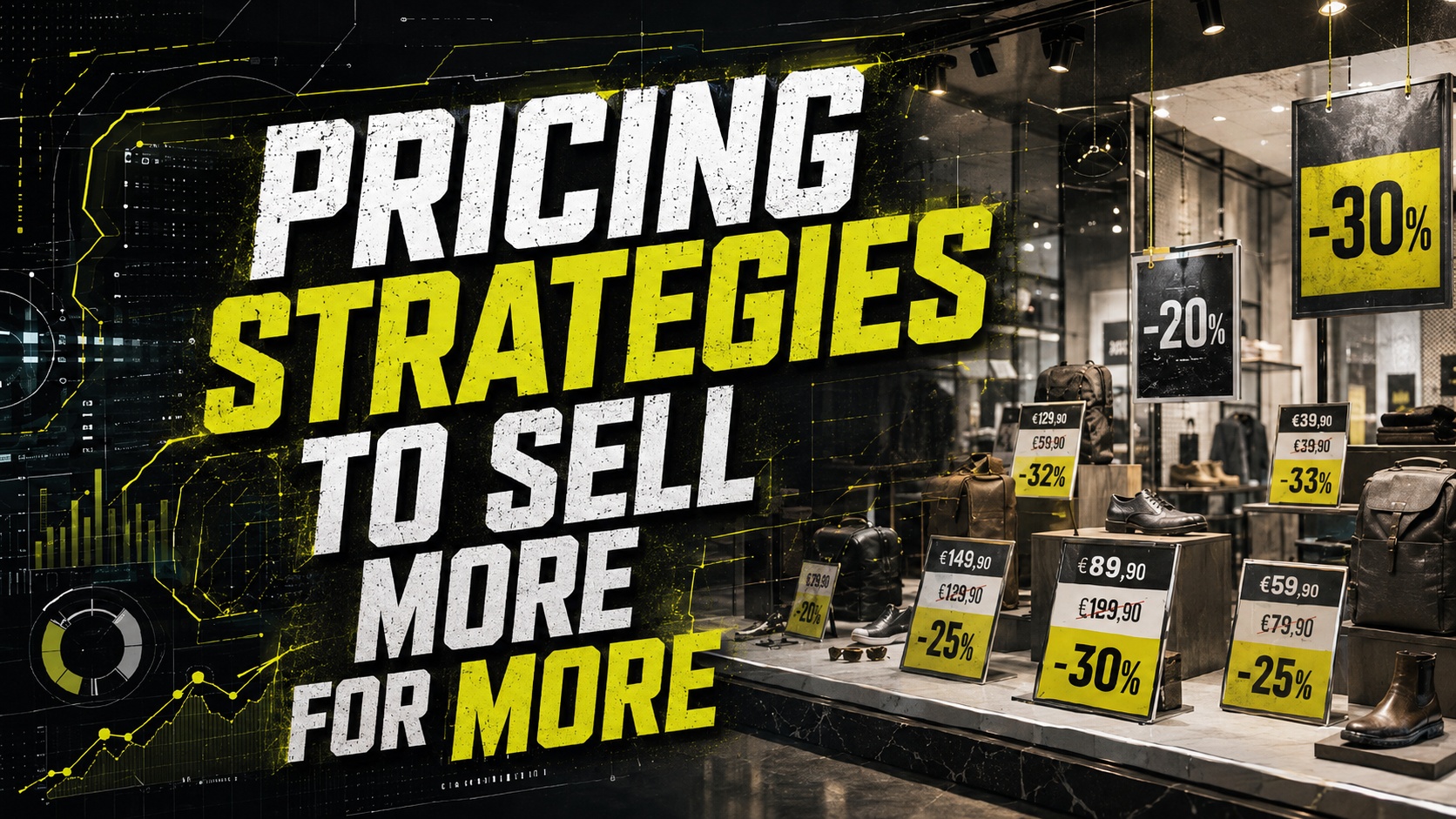
Prices set to influence perception: 9.99 instead of 10, 0.99 instead of 1. They lower the psychological spending threshold and work very well in retail and e-commerce, where price is one of the main factors in the purchase decision. Less effective in B2B contexts or for premium products, where a "broken" price can seem unprofessional.
Dynamic Pricing.
The price varies in real time based on supply and demand, managed by algorithms. It's the strategy of airlines, hotels, and electronics sites. It allows you to maximize revenue on every single transaction, but it requires adequate technological infrastructure and can generate customer dissatisfaction if perceived as untransparent.
Penetration Pricing.
Low prices at launch to gain market share quickly. It works for entering competitive markets, but it's risky in the long run: customers acquired thanks to the low price are often the least loyal, and raising prices later is always harder than it seems. Not recommended as a structural strategy.
Skimming Pricing.
The opposite of the previous one: a high price at launch to capture the customers least sensitive to price, then a progressive reduction to broaden the market. It's what happens with every new smartphone: those who buy it on launch day pay the maximum, those who wait three months already find it discounted by 20%. It works well for innovative products where novelty has intrinsic value.
Competitive Pricing.
Prices aligned with the competition. Simple to apply, but dangerous in the long run: it turns you into a commodity and the only lever left is to lower the price even further. The antidote is to build a stronger brand positioning that justifies a premium over competitors.
Pricing isn't static: it needs to be monitored and updated
One of the most common mistakes is treating price as a decision made only once.
The market changes. Competitors change. The perceived value of your product changes as the brand matures. An effective pricing strategy continuously adapts to these changes, monitoring sales data, margins by product line, and customer behavior.
Today the tools to do this exist. Sales data analyzed in real time allows you to understand where the best margins are concentrated, which product lines are undervalued, and where there's room to adjust the price without losing volume.
The Salestack AI platform allows you to monitor performance by product line, identify upselling opportunities toward premium references, and build incentive mechanics that push salespeople toward the products with the highest margins. Because having the right pricing strategy is only half the job: the other half is making sure that whoever sells knows it and applies it.
The question I'll leave you with
When you set the last price for one of your products or services, what was the main criterion?
If the answer is "costs plus a margin" or "I looked at what the competition is doing," you're probably leaving margin on the table. And in increasingly competitive markets, that margin is exactly what separates growth from stagnation.
Gianluca Testa
Founder Salestack
Host of the Business Garage Podcast